Mostly triangular

Distance to ‘STOP’ line ahead
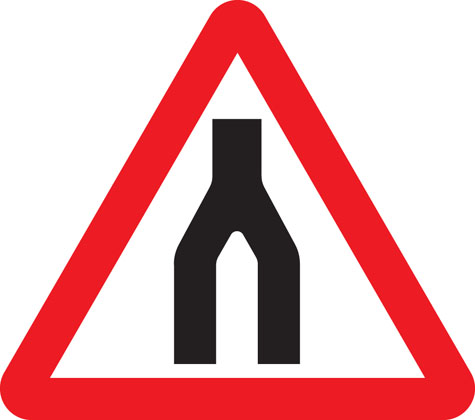
Dual carriageway ends
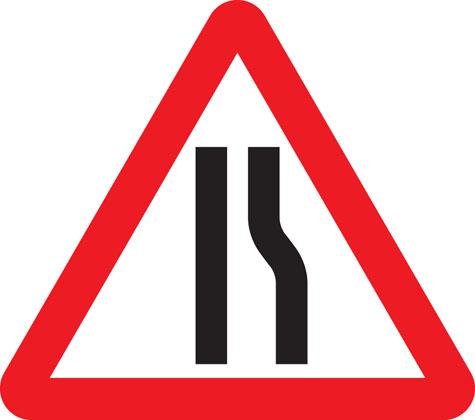
Road narrows on right (left if symbol reversed)
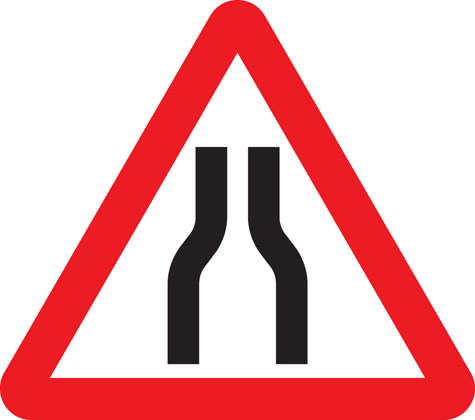
Road narrows on both sides
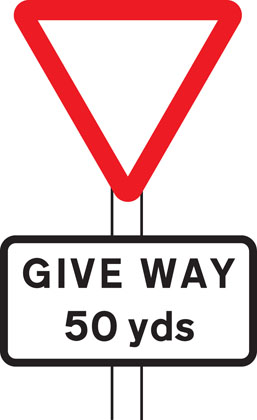
Distance to ‘Give Way’ line ahead
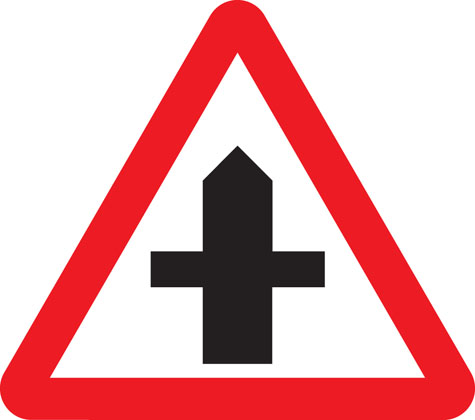
Crossroads
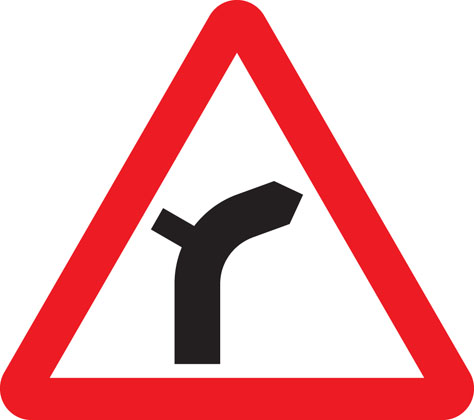
Junction on bend ahead
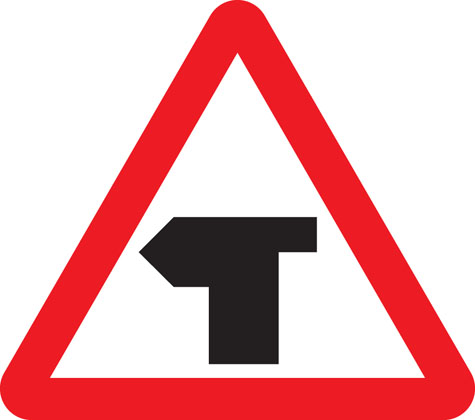
T-junction with priority over vehicles from the right
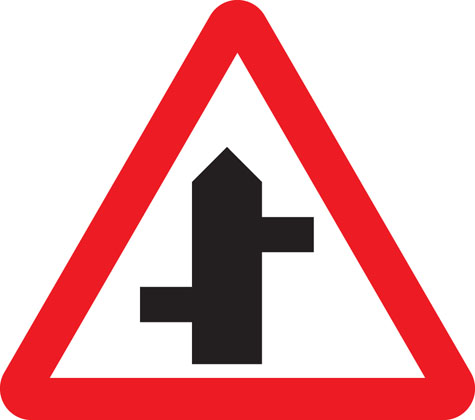
Staggered junction
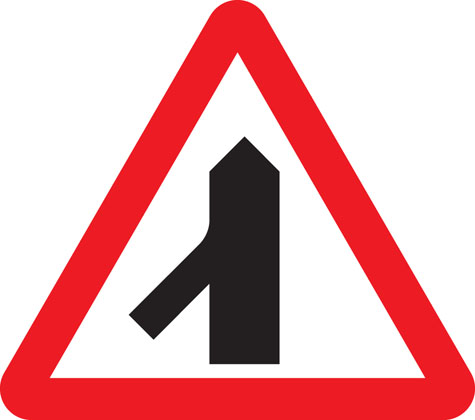
Traffic merging from left ahead
The priority through route is indicated by the broader line.
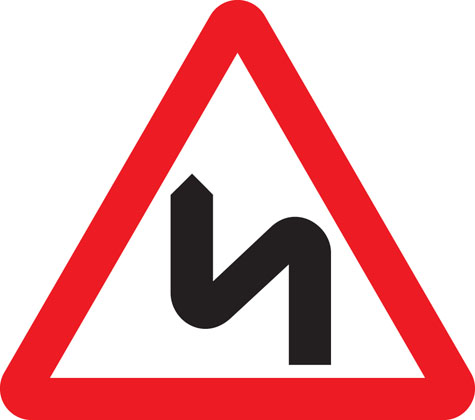
Double bend first to left (symbol may be reversed)
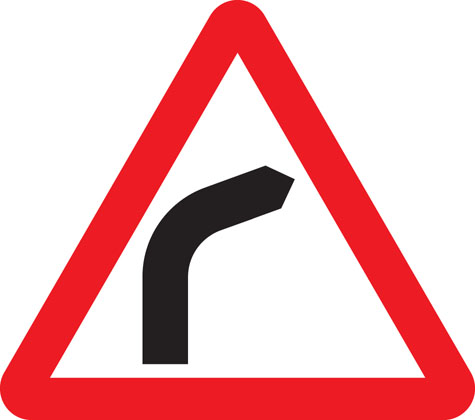
Bend to right (or left if symbol reversed)
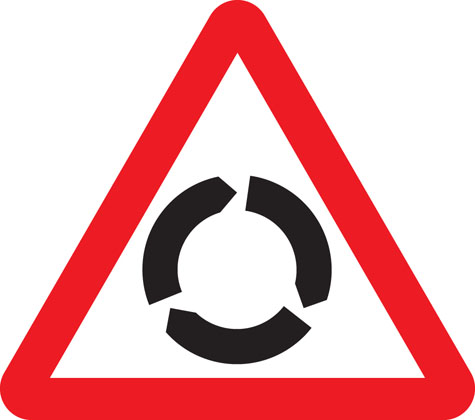
Roundabout

Uneven road
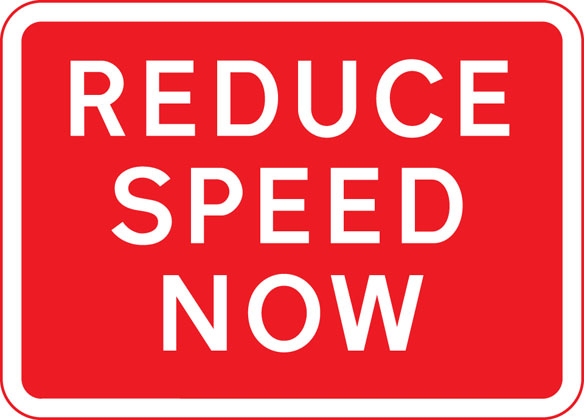
Plate below some signs
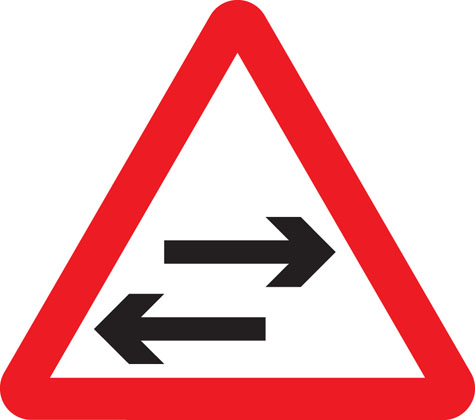
Two-way traffic crosses one-way road
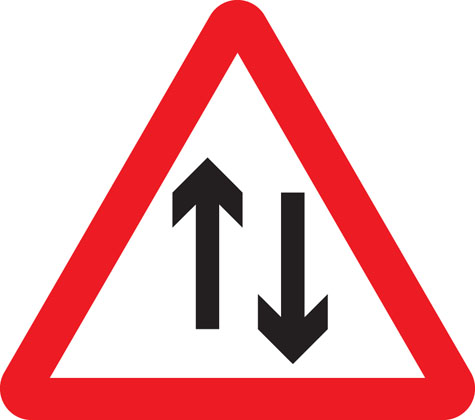
Two-way traffic straight ahead
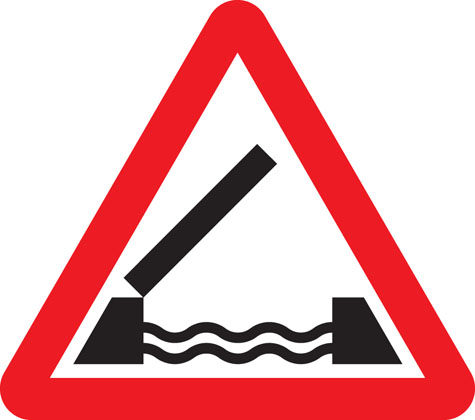
Opening or swing bridge ahead
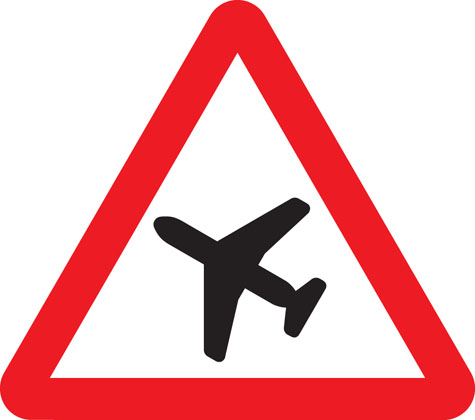
Low-flying aircraft or sudden aircraft noise
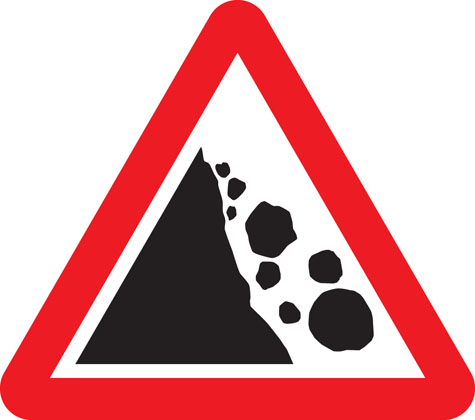
Falling or fallen rocks
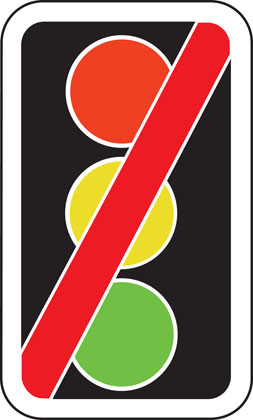
Traffic signals not in use
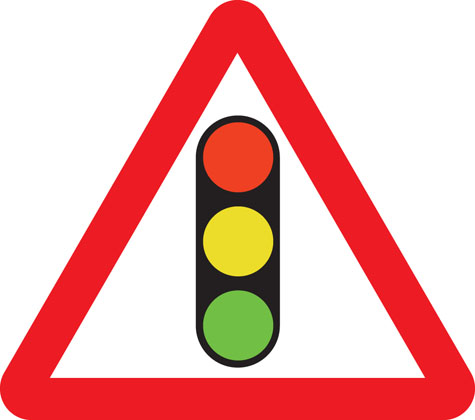
Traffic signals
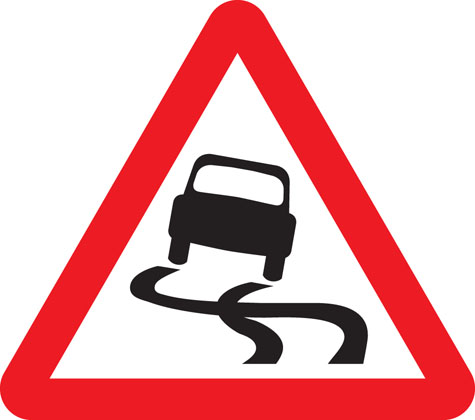
Slippery road
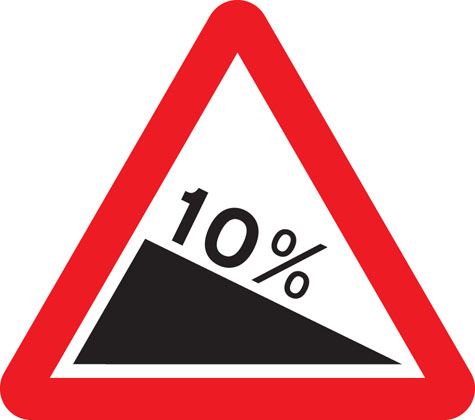
Steep hill downwards
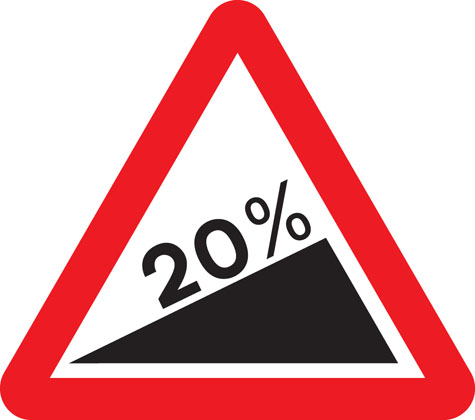
Steep hill upwards
Gradients may be shown as a ratio i.e. 20% = 1:5
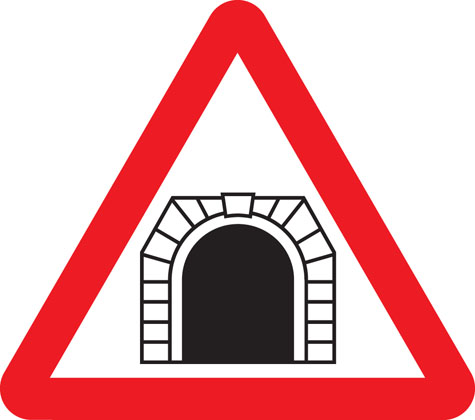
Tunnel ahead
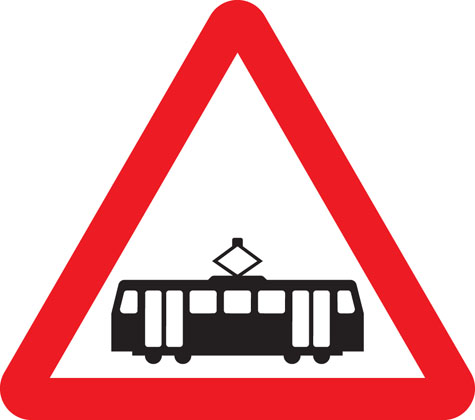
Trams crossing ahead
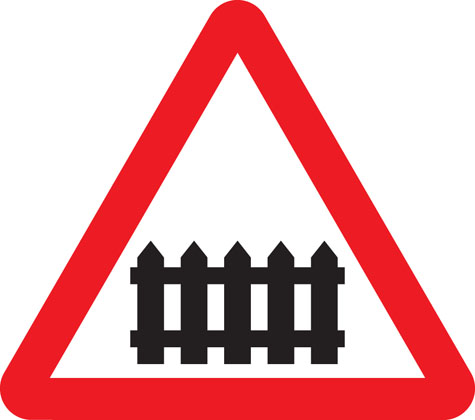
Level crossing with barrier or gate ahead
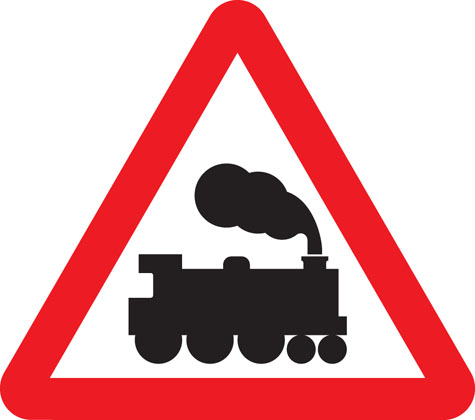
Level crossing without barrier or gate ahead

Level crossing without barrier
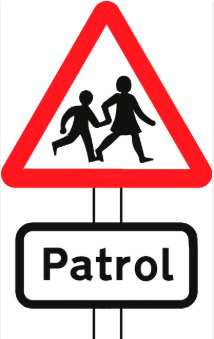
School crossing patrol ahead (some signs have amber lights which flash when crossings are in use)
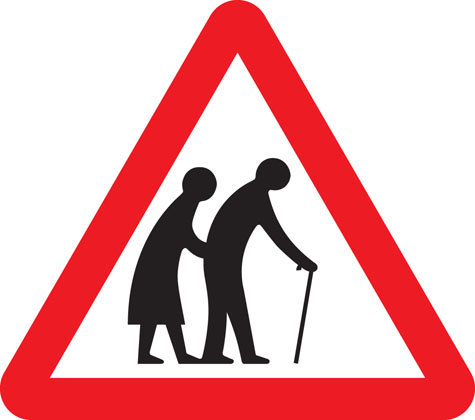
Frail (or blind or disabled if shown) pedestrians likely to cross road ahead
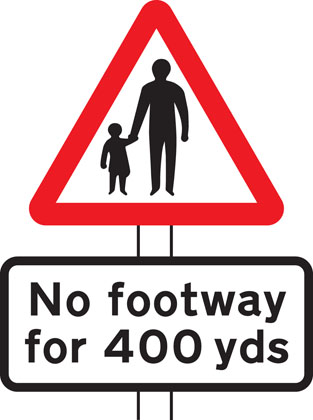
Pedestrians in road ahead
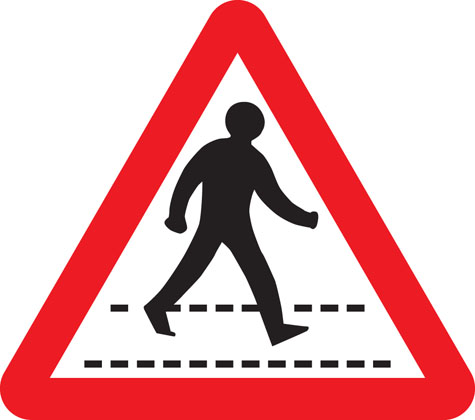
Zebra crossing
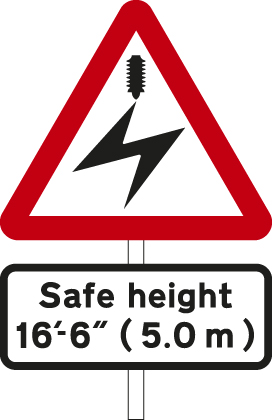
Overhead electric cable; plate indicates maximum height of vehicles which can pass safely
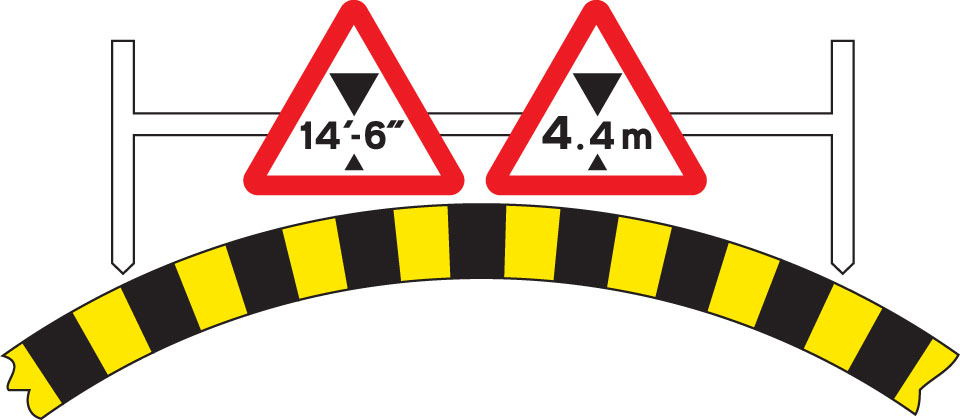
Available width of headroom indicated

Sharp deviation of route to left (or right if chevrons reversed)

Light signals ahead at level crossing, airfield or bridge
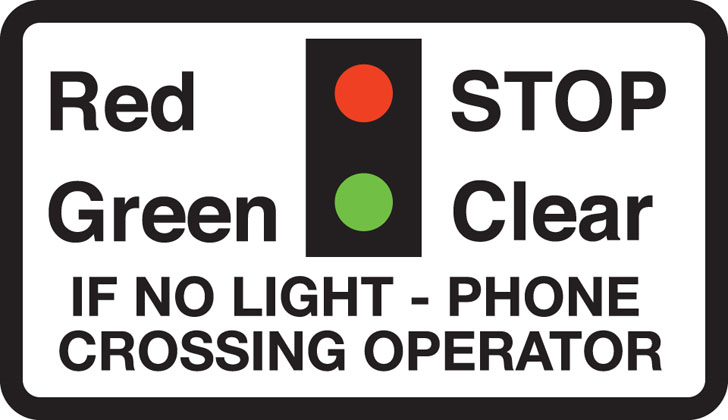
Miniature warning lights at level crossings
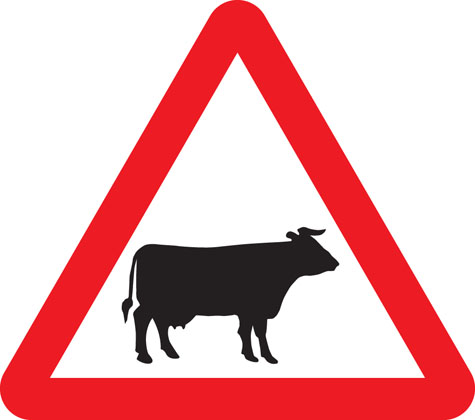
Cattle
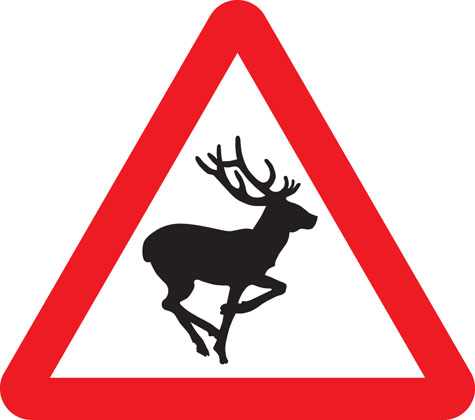
Wild animals
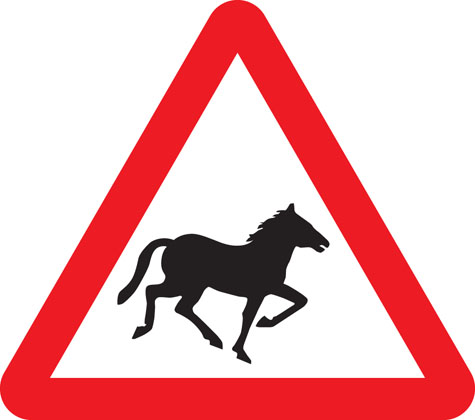
Wild horses or ponies
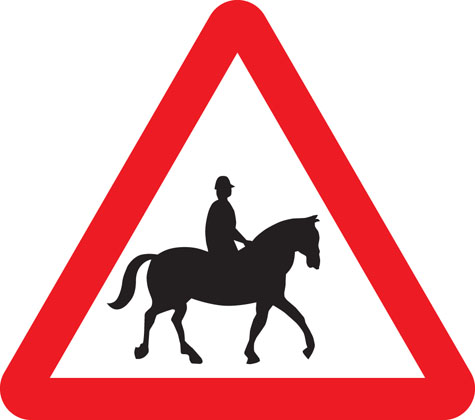
Accompanied horses or ponies
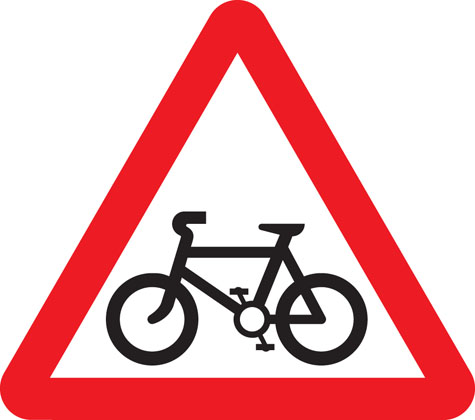
Cycle route ahead
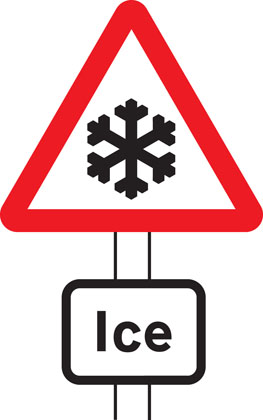
Risk of ice
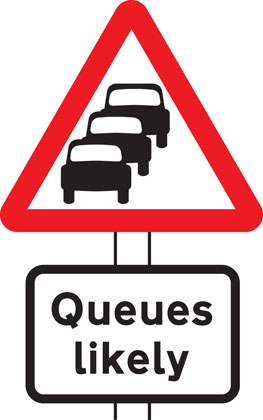
Traffic queues likely ahead
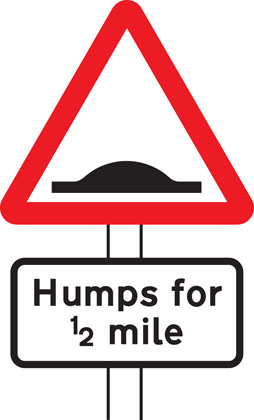
Distance over which road humps extend
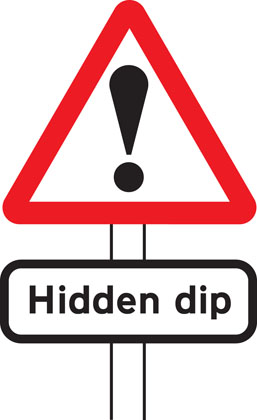
Other danger; plate indicates nature of danger
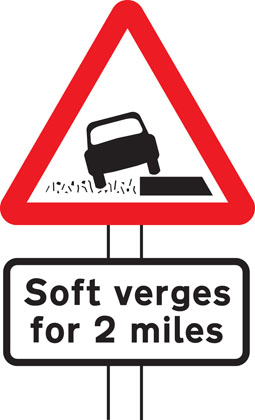
Soft verges
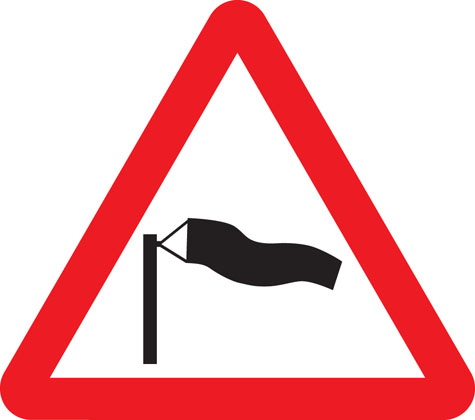
Side winds

Hump bridge
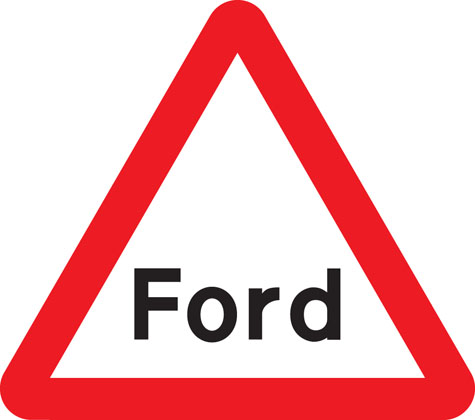
Worded warning sign
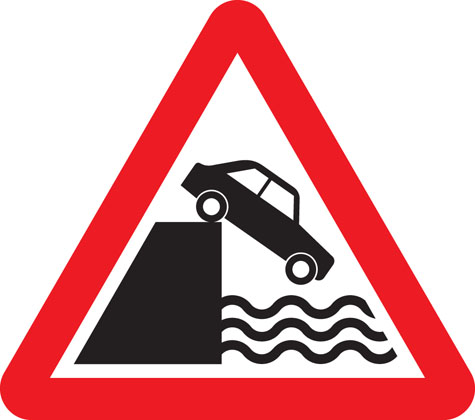
Quayside or river bank

Risk of grounding
Author's Explanation
Warning Signs on the Road Explained
Warning signs are mainly triangular signs designed to alert drivers about hazards, changes in road conditions or situations requiring extra attention. They give drivers time to adjust their speed, position and driving behaviour before reaching the hazard.
These signs can warn about many different risks, including bends, junctions, pedestrians, animals, road narrowing, level crossings and changes in traffic conditions. Drivers should always read the sign carefully and look for additional plates underneath that provide extra information.
A warning sign does not always require immediate action, but it means drivers should be prepared. Reducing speed and increasing observation helps prevent collisions, especially where hazards may appear suddenly.
Real-Life Examples
Example 1: A driver sees a bend warning sign ahead, reduces speed early and positions the vehicle correctly before entering the bend.
Example 2: A driver approaches a pedestrian warning sign and slows down because people may cross the road unexpectedly.
Example 3: A driver sees a slippery road warning sign during winter conditions and increases the following distance to allow more time to stop.
Example 4: A driver notices a level crossing warning sign and prepares to stop if lights or barriers indicate that a train is approaching.
Frequently Asked Questions
What do triangular warning signs mean?
Triangular warning signs alert drivers about possible hazards ahead and give them time to prepare before reaching the danger area.
Should drivers always slow down when seeing a warning sign?
Drivers should adjust their speed according to the hazard shown. Some signs require immediate caution, while others require drivers to prepare for conditions ahead.
What are plates below warning signs used for?
Additional plates provide more details about the warning, such as the distance to the hazard or the type of danger ahead.
Why are warning signs important for safe driving?
Warning signs help drivers recognise hazards early, allowing them to make safer decisions and avoid sudden reactions.