Driving in adverse weather conditions (226 to 237)
Rules for driving in adverse weather conditions, including wet weather, icy and snowy weather, windy weather, fog and hot weather.
Overview (rule 226)
Rule 226
You MUST use headlights when visibility is seriously reduced, generally when you cannot see for more than 100 metres (328 feet). You may also use front or rear fog lights but you MUST switch them off when visibility improves (see Rule 236).
Wet weather (rule 227)
Rule 227
Wet weather. In wet weather, stopping distances will be at least double those required for stopping on dry roads (see ‘Typical stopping distances’). This is because your tyres have less grip on the road. In wet weather
- you should keep well back from the vehicle in front. This will increase your ability to see and plan ahead
- if the steering becomes unresponsive, it probably means that water is preventing the tyres from gripping the road. Ease off the accelerator and slow down gradually
- the rain and spray from vehicles may make it difficult to see and be seen
- be aware of the dangers of spilt diesel that will make the surface very slippery (see Vehicle maintenance, safety and security)
- take extra care around pedestrians, cyclists, motorcyclists and horse riders.
Icy and snowy weather (rules 228 to 231)
Rule 228
In winter check the local weather forecast for warnings of icy or snowy weather. DO NOT drive in these conditions unless your journey is essential. If it is, take great care and allow more time for your journey. Take an emergency kit of de-icer and ice scraper, torch, warm clothing and boots, first aid kit, jump leads and a shovel, together with a warm drink and emergency food in case you get stuck or your vehicle breaks down.
Rule 229
Before you set off
- you MUST be able to see, so clear all snow and ice from all your windows
- you MUST ensure that lights are clean and number plates are clearly visible and legible
- make sure the mirrors are clear and the windows are demisted thoroughly
- remove all snow that might fall off into the path of other road users
- check your planned route is clear of delays and that no further snowfalls or severe weather are predicted.
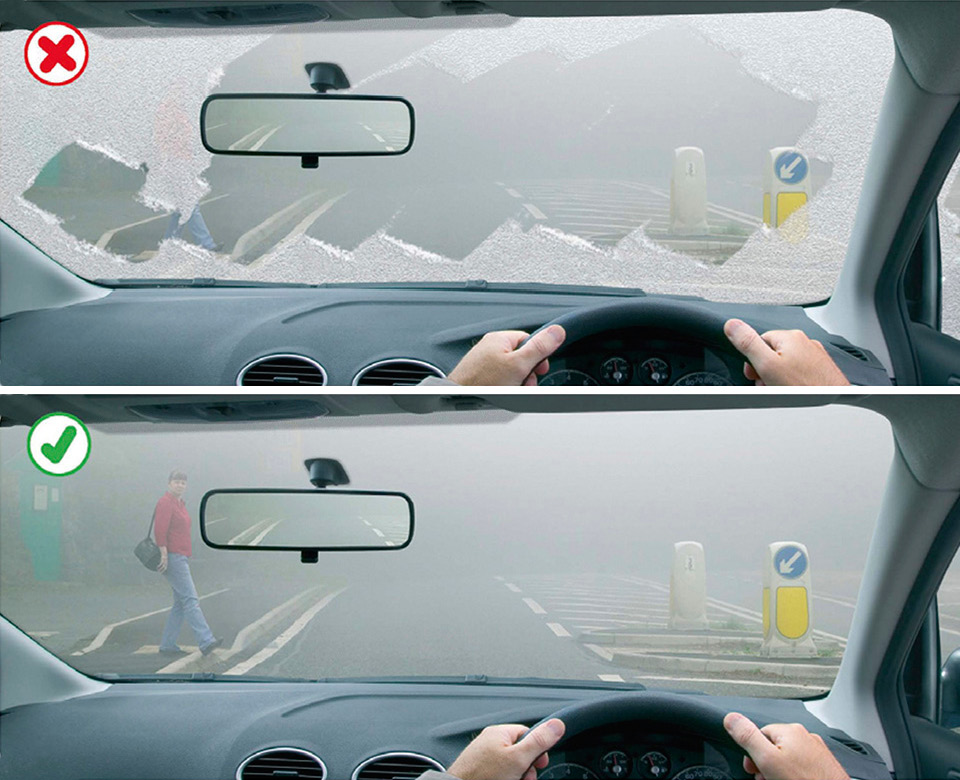
Rule 229: Make sure your windscreen is completely clear
Rule 230
When driving in icy or snowy weather
- drive with care, even if the roads have been treated
- keep well back from the road user in front as stopping distances can be ten times greater than on dry roads
- take care when overtaking vehicles spreading salt or other de-icer, particularly if you are riding a motorcycle or cycle
- watch out for snowploughs which may throw out snow on either side. Do not overtake them unless the lane you intend to use has been cleared
- be prepared for the road conditions to change over relatively short distances
- listen to travel bulletins and take note of variable message signs that may provide information about weather, road and traffic conditions ahead.
Rule 231
Drive extremely carefully when the roads are icy. Avoid sudden actions as these could cause loss of control. You should
- drive at a slow speed in as high a gear as possible; accelerate and brake very gently
- drive particularly slowly on bends where loss of control is more likely. Brake progressively on the straight before you reach a bend. Having slowed down, steer smoothly round the bend, avoiding sudden actions
- check your grip on the road surface when there is snow or ice by choosing a safe place to brake gently. If the steering feels unresponsive this may indicate ice and your vehicle losing its grip on the road. When travelling on ice, tyres make virtually no noise.
Windy weather (rules 232 to 233)
Rule 232
High-sided vehicles are most affected by windy weather, but strong gusts can also blow a car, cyclist, motorcyclist or horse rider off course. This can happen on open stretches of road exposed to strong crosswinds, or when passing bridges or gaps in hedges.
Rule 233
In very windy weather your vehicle may be affected by turbulence created by large vehicles. Motorcyclists are particularly affected, so keep well back from them when they are overtaking a high-sided vehicle.
Fog (rules 234 to 236)
Rule 234
Before entering fog check your mirrors then slow down.
If ‘Fog’ is shown on a sign but the road is clear, be prepared for a bank of fog or drifting patchy fog ahead. Even if it seems to be clearing, you can suddenly find yourself in thick fog.
Rule 235
When driving in fog you should
- use your lights as required (see Rule 226)
- keep a safe distance behind the vehicle in front. Rear lights can give a false sense of security
- be able to pull up well within the distance you can see clearly. This is particularly important on motorways and dual carriageways, as vehicles are travelling faster
- use your windscreen wipers and demisters
- beware of other drivers not using headlights
- not accelerate to get away from a vehicle which is too close behind you
- check your mirrors before you slow down. Then use your brakes so that your brake lights warn drivers behind you that you are slowing down
- stop in the correct position at a junction with limited visibility and listen for traffic. When you are sure it is safe to emerge, do so positively and do not hesitate in a position that puts you directly in the path of approaching vehicles.
Rule 236
You MUST NOT use front or rear fog lights unless visibility is seriously reduced (see Rule 226) as they dazzle other road users and can obscure your brake lights. You MUST switch them off when visibility improves.
Hot weather (rule 237)
Rule 237
Keep your vehicle well ventilated to avoid drowsiness. Be aware that the road surface may become soft or if it rains after a dry spell it may become slippery. These conditions could affect your steering and braking. If you are dazzled by bright sunlight, slow down and if necessary, stop.
Author's Explanation
Driving in Wet Weather Explained (Rules 226–227)
Poor weather can reduce visibility and tyre grip within seconds. When visibility falls to around 100 metres or less, drivers must use dipped headlights. Fog lights may also be used when visibility is seriously reduced, but they should be switched off again as soon as conditions improve to avoid dazzling other road users.
Rain significantly increases stopping distances because tyres have less grip on the road surface. Leave a larger gap to the vehicle ahead, reduce your speed and avoid sudden steering or braking. If your steering feels light or unresponsive, ease off the accelerator smoothly as your tyres may be travelling over standing water.
Wet roads can also reduce visibility due to spray from other vehicles. Pay extra attention to pedestrians, cyclists, motorcyclists and horse riders, who may be harder to see and more vulnerable in poor weather conditions.
Real-Life Examples
Example 1: Heavy rain begins while driving on a dual carriageway. You increase your following distance and reduce your speed because braking distances are much longer on wet roads.
Example 2: Your steering suddenly feels less responsive after driving through standing water. You ease off the accelerator gently and avoid braking sharply until the tyres regain grip.
Example 3: Visibility drops in heavy rain to less than 100 metres, so you switch on your dipped headlights to help you see and be seen.
Example 4: You approach a pedestrian crossing during heavy rain and slow down early because pedestrians may be harder to see through the spray.
Frequently Asked Questions
When should you use headlights in poor weather?
Use dipped headlights whenever visibility is seriously reduced, generally when you cannot see more than about 100 metres ahead. Headlights also help other road users see your vehicle.
Why does rain increase stopping distances?
Water reduces the grip between your tyres and the road surface. As a result, your vehicle needs much more distance to slow down and stop safely.
What should you do if your steering becomes unresponsive on a wet road?
Ease off the accelerator smoothly and allow the tyres to regain contact with the road. Avoid harsh braking or sudden steering movements that could cause a loss of control.
Can you leave fog lights on after visibility improves?
No. Front and rear fog lights should be switched off once visibility improves because they can dazzle other drivers and make your brake lights harder to see.
Why should you leave a bigger gap in wet weather?
A larger following distance gives you more time to react to hazards and compensates for the longer braking distances caused by reduced tyre grip on wet roads.
Author's Explanation
Driving in Icy and Snowy Weather Explained (Rules 228–231)
Snow and ice can make even familiar roads unpredictable. Before travelling, check the weather forecast and consider whether your journey is really necessary. If severe weather is expected, allowing extra travel time and preparing your vehicle can make your trip much safer.
Before setting off, completely clear snow and ice from every window, mirror, light and number plate. Good visibility is essential, and loose snow left on the roof can fall onto your windscreen or another vehicle while driving.
Drive smoothly on icy roads by accelerating, steering and braking gently. Leave a much larger gap to the vehicle ahead, reduce your speed before bends and expect road conditions to change quickly, even over short distances.
Real-Life Examples
Example 1: Before leaving home on a frosty morning, you remove all ice and snow from the windows, mirrors, lights and roof before starting your journey.
Example 2: While driving on an untreated country road, you leave a much larger following distance because stopping distances are greatly increased on ice.
Example 3: You slow down well before entering a bend, complete most of your braking in a straight line and steer smoothly through the corner.
Example 4: A snowplough is clearing your lane ahead. You stay behind and wait until it is safe instead of trying to overtake.
Frequently Asked Questions
Should you drive during heavy snow or icy weather?
Only travel if your journey is essential. If you must drive, allow extra time, prepare your vehicle properly and adjust your driving to the road conditions.
Why must all snow be removed from the vehicle?
Snow and ice reduce visibility and can fall onto your windscreen or into the path of other road users. Cleaning the entire vehicle before driving improves safety for everyone.
How should you brake on icy roads?
Brake gently and progressively while travelling in a straight line whenever possible. Avoid sudden braking or steering, as these actions can cause the tyres to lose grip.
Why should you leave a much bigger gap in snowy conditions?
Stopping distances on snow and ice can be up to ten times longer than on dry roads. A larger gap gives you enough space to slow down safely if traffic stops suddenly.
What should you carry in your vehicle during winter?
A winter emergency kit can include an ice scraper, de-icer, torch, warm clothing, boots, first aid kit, jump leads, a shovel, food and a warm drink in case you become stranded.
Author's Explanation
Windy Weather and Fog Explained (Rules 232–236)
Strong winds and fog can create unexpected hazards by affecting visibility and vehicle control. Drivers should be aware that sudden gusts can move vehicles sideways, especially on exposed roads, bridges and open stretches of countryside.
High-sided vehicles, motorcycles, bicycles and horse riders can be particularly affected by windy conditions. Give extra space when passing or being passed by large vehicles, as air turbulence can make smaller vehicles harder to control.
Fog reduces the distance you can see and makes judging speed and distance more difficult. Use appropriate lights, reduce your speed and always make sure you can stop safely within the distance visible ahead.
Real-Life Examples
Example 1: You are driving across an exposed bridge during strong winds and reduce your speed because sudden gusts could push your vehicle sideways.
Example 2: A motorcyclist is passing a large lorry in windy conditions. You keep extra distance because turbulence from the lorry may affect the rider's balance.
Example 3: Dense fog appears suddenly on a rural road. You slow down before entering the fog and make sure you can stop within the distance you can see.
Example 4: Visibility improves after driving through fog, so you switch off your fog lights to avoid dazzling other road users.
Frequently Asked Questions
How can strong winds affect driving?
Strong gusts can push vehicles off course, especially high-sided vehicles, motorcycles, cyclists and vehicles travelling on exposed roads.
Why are high-sided vehicles affected more by wind?
Their larger surface area catches more wind, making them more vulnerable to strong gusts and sudden changes in direction.
How should you drive in fog?
Slow down, use the correct lights and keep enough distance from the vehicle ahead. You should always be able to stop within the area you can clearly see.
When should fog lights be used?
Fog lights should only be used when visibility is seriously reduced, generally when you cannot see more than 100 metres. They must be switched off when visibility improves.
Why should you check mirrors before slowing down in fog?
Checking mirrors allows you to see how close vehicles behind are before reducing speed. This helps avoid surprising other drivers who may have limited visibility.
Author's Explanation
Driving in Hot Weather Explained (Rule 237)
Hot weather can affect both the driver and the vehicle. High temperatures may increase tiredness, reduce concentration and make long journeys more difficult. Keeping the vehicle ventilated and taking suitable breaks helps drivers remain alert and maintain safe control.
Very warm conditions can also affect the road surface. Roads may become softer during extreme heat, and rain after a long dry period can create slippery conditions because oil and other substances on the surface mix with water.
Bright sunlight can seriously reduce visibility. If you are dazzled by the sun, reduce your speed and be prepared to stop if necessary. Drivers should always travel at a speed that allows them to react safely to hazards.
Real-Life Examples
Example 1: A driver starts a long summer journey and keeps the vehicle ventilated while planning regular stops to avoid fatigue.
Example 2: Bright sunlight makes it difficult to see traffic lights clearly, so the driver slows down and approaches carefully.
Example 3: After a long period of hot weather, rain begins to fall. The driver reduces speed because the road surface may become slippery.
Example 4: A driver feels tired during a hot afternoon journey and stops safely for a rest before continuing.
Frequently Asked Questions
How can hot weather affect driving?
Hot weather can cause tiredness and reduced concentration. Drivers should stay comfortable, keep the vehicle ventilated and take breaks during longer journeys.
Can hot weather change road conditions?
Yes. Extreme heat can soften road surfaces, while rain after a dry period can make roads slippery. Drivers should adjust their speed and driving style.
What should you do if sunlight dazzles you?
Slow down and avoid driving faster than conditions allow. If visibility becomes seriously affected, stop in a safe place until you can continue safely.
Why is ventilation important in hot weather?
Good ventilation helps reduce discomfort and tiredness, allowing drivers to stay focused and react properly to hazards.